The best way to engage students in new literacies is to try new things. One thing I have learned this year is just because it works for one teacher doesn't mean it will for everyone. I think trying out new techniques until you find what engages your own students is the key. When deciding what to do a key factor for me is engagement. This is why it helps to do something you know is engaging in a hands-on approach and then enhancing it with digital literacies.
Analog and digital learning experiences can be powerfully combined in a first-grade classroom to tackle complex learning goals. In my classroom, we are getting started on a butterfly life cycle unit. This is a unit in which I have planned activities that align both analog learning and digital learning.
The analog component would involve students observing live caterpillars in a classroom habitat, drawing daily observations in a paper journal, and creating a physical life cycle wheel with drawings representing each stage. This hands-on experience builds foundational knowledge and fine motor skills. Digitally, students could use a tablet app to watch time-lapse videos of a caterpillar transforming into a butterfly, compare their drawings to high-quality images, and even create a digital "story" of their caterpillar's journey using a simple presentation tool. This allows for exposure to detailed visuals and different perspectives, addressing the tension of access to varied resources. This activity is similar to the idea that Coggin et. al included about play-based filmmaking being successful way to integrate technology into younger students' work. I do think that by doing a digital activity like this in my classroom with 1st grade students I will be partnering them up as their skills to create a digital story will be starting at very minimal knowledge. With an activity like this, some tensions can occur like, not receiving real-time feedback, not having enough scaffolding or research to support it, and having very open guidelines and access. (Magnifico, p. 149, 2018). I would definitely provide my students with a sample digital story and walk them through which tools we were using before sending them off. To help with providing the scaffolding still I might have students do their research and put it onto a graphic organizer first before creating a digital story. I think the biggest challenge when implementing this in my classroom will be having students not getting enough feedback. "For instance, younger creators are more likely to revise when given formal feedback" (Magnifico, p.146, 2018). This is something challenging when doing online creation using affinity spaces. The way I would avoid this is by using Google Classroom and Google Slides and then seeing if we could create a class blog where all finished products get uploaded and shared out to other classes rather than sharing it out on a different kind of platform. The quote "In the end, we see a need for greater diversity and nuance in calls to bring technological environments such as UGC affinity spaces into literacy classsrooms to provide external validation and motivation for student work" resonates with me (Magnifico, p. 151, 2018).
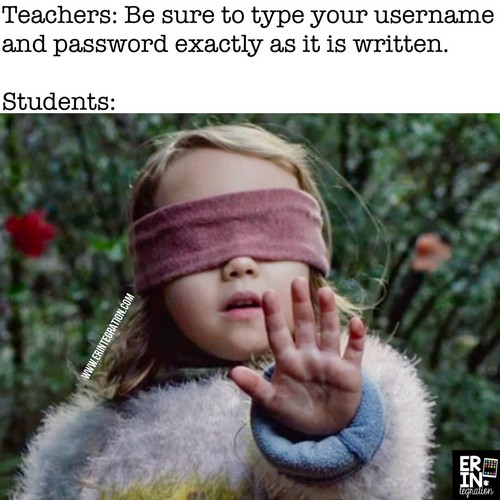
I will leave this meme with you all as I feel it is sometimes a real struggle to use new technology in the classroom and I am sure many of you agree.
References:
Coggin, Linda & Buchholz, Beth & Wessel Powell, Christy & Husbye, Nicholas & Wohlwend, Karen. (2014). Expanding Early childhood Literacy Curriculum through Play-Based Film-making and Popular Media.
Magnifico, A. M., Lammers, J. C., & Fields, D. A. (2018). Affinity spaces, literacies and classrooms: tensions and opportunities. Literacy, 52(3), 145–152. https://doi-org.sunyempire.idm.oclc.org/10.1111/lit.12133