Monday, June 23, 2025

M7: Games and Simulations

 https://www.mathplayground.com/ASB_IslandChaseSubtraction.html


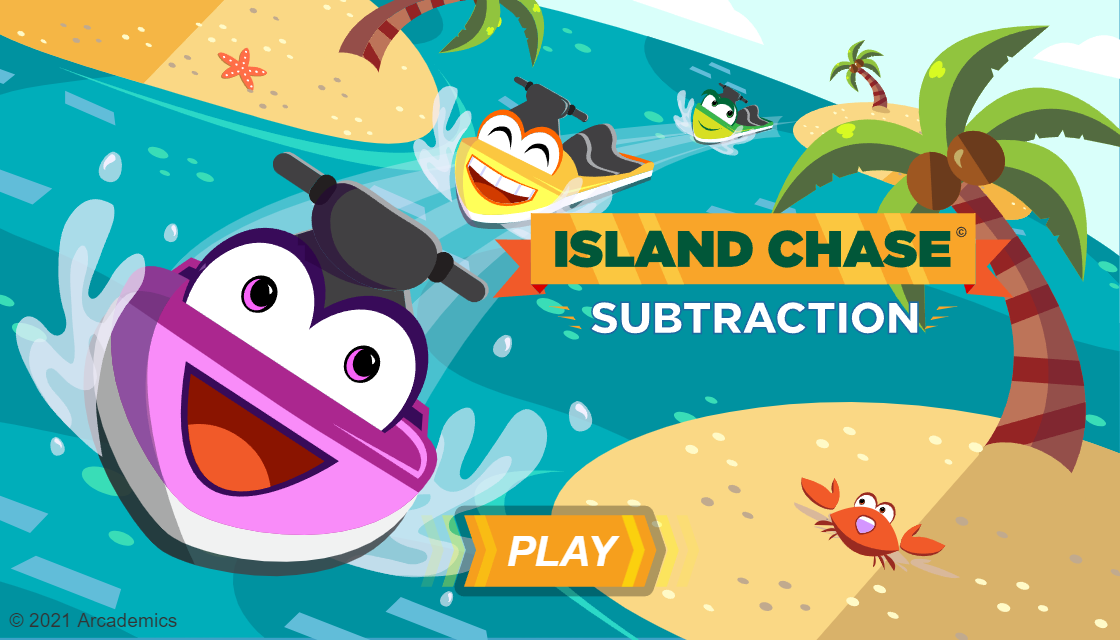
I chose a math game that we use very often at my school. This website has games for almost any skill you can imagine for grades k-6. "Island Chase Subtraction" is an engaging, multiplayer online game available on Math Playground, designed to help students practice and master subtraction facts up to 12. In this wacky water race, students mentally solve subtraction problems to propel their boat forward, making it an excellent tool for developing mental math fluency. Its interactive and competitive nature, whether played as a whole group activity or independently on Google Classroom, significantly boosts student engagement. You can find the game here: Island Chase Subtraction. The visual appeal of the race and the immediate feedback on answers make it a dynamic way to reinforce mathematical concepts. This game can be seamlessly integrated into a mathematics unit focused on subtraction within 20, particularly for Grades 1 and 2, aligning with New York State Next Generation standards. I love knowing that these games directly link to the skills we need to teach young students. Our learning objectives for such a unit would include students being able to fluently subtract within 20 using mental strategies, understanding subtraction as an unknown-addend problem, and applying properties of operations as strategies to subtract. "Island Chase Subtraction" directly supports these objectives by providing repeated practice in a fun context, helping students to quickly recall subtraction facts and develop their mental arithmetic skills in a way that traditional worksheets might not. The competitive element can also encourage students to improve their speed and accuracy. There is a column at the end that shows the students accuracy, rate per minute, and missed questions so we can use this to make data informed decisions if needed as well. I can then use this to make a worksheet of commonly missed questions for students to do as practice using a strategy other than mental math or quick count on/count back strategy. 

Island Chase Subtraction - Arcademics


Using games in the classroom are very helpful for students. Not only are they engaging and reach learners that have a different learning style but according to Gee and Schaffer (2010) "digital technologies-including games- are letting young people produce projects and knowledge and to participate in learning communities as never before" (p. 4). I have found that integrating games has allowed for students to build a deeper understanding and connection to the concepts we are learning about. 

To implement "Island Chase Subtraction," I would introduce it as a fun challenge, perhaps by playing a round as a whole class on an interactive whiteboard to model the gameplay and expectations. Students would then access the game independently via Google Classroom on their devices

A way to scaffold this is to partner students up so they can work together. Another way I might scaffold this is to provide students with manipulative to use. Another differentiation technique I can incorporate is a punch card. If a student is struggling with subtraction with numbers greater than 8 I can have them practice those ones more using the game and give them a punch for every time they get a certain number correct. This can help build up confidence as well. 

There are many ways I can use this to assess students literacy practices as well as the objective of subtraction facts. Beyond observing their in-game performance (speed and accuracy), I would incorporate reflective practices. Students could be asked to verbally explain their mental math strategies for specific problems, either to a peer or to me, fostering mathematical communication. They could also write short sentences about the game, developing their written mathematical literacy. Furthermore, small-group discussions after playing the game would allow me to assess their ability to articulate mathematical concepts and engage in collaborative problem-solving. Finally, traditional formative assessments, such as exit tickets requiring them to solve a few subtraction problems without the game, would gauge their retention of facts and strategies. Games require students to problem solve thus allowing for assessment easily from a game (Shaffer&Gee, p. 12, 2010). 


References: 

Shaffer, David & Gee, James. (2010). Looking where the light is bad: Video games and the future of assessment. Phi Delta Kappa International EDge. 6. 

Thursday, June 19, 2025

M6 Blog

 One educational tool I would like to discuss is ClassDojo. ClassDojo is a digital communication platform designed to connect teachers, students, and parents. It supports classroom management through behavior tracking, messaging, and sharing student progress. Its interface is user-friendly, which makes it especially valuable in lower elementary settings like first grade (ClassDojo, n.d.). ClassDojo encourages informal, instant communication. Teachers and parents can message each other directly, fostering ongoing dialogue outside of traditional parent-teacher conferences. This shifts communication from periodic to continuous, supporting more proactive involvement (ClassDojo, n.d.). Teachers can post announcements, videos, or pictures, which parents can easily access through the app. This reduces reliance on paper newsletters and supports multimedia sharing. Parents consume and interact with information more visually and in real-time (Common Sense Education, n.d.. This provides multiple forms of literacy for families at home in a digital way. ClassDojo supports educational goals by reinforcing classroom culture, encouraging parental involvement, and facilitating transparent communication. As a teacher, I use it to bridge school-home connections and reinforce behavior expectations. Parents support their children by responding to updates and celebrating achievements at home. ClassDojo is safe to use in the classroom because no data is sold and it is complied with FERPA (U.S. Department of Education, 2023).. Teachers can use it to provide positive behavior reinforcement, send announcements, and share class updates with families. Students(with guidance) can personalize avatars and receive real-time feedback on their behavior and class participation. Parents can engage by viewing their child’s progress, receiving messages from the teacher, and staying updated with classroom activities (Common Sense Education, n.d.).

Why Class Dojo is a Must For Every Teacher | by edchatwithtasha | Medium

ClassDojo

ClassDojo

The next digital platform I would like to discuss is SeeSaw. Seesaw is a digital portfolio platform that allows students to create, reflect on, and share their learning. It includes multimedia tools for drawing, voice recording, video, and photo submissions. It is particularly effective for early elementary classrooms where students are emerging readers and writers (Seesaw, n.d.). Students can upload assignments, narrate drawings, or record videos explaining their learning. Teachers can review and comment on student work, assign activities, and track growth over time. Parents can receive notifications and can see their child’s work and progress in real time (Common Sense Education, n.d.). Seesaw promotes multimodal communication. Instead of just text, young learners can express understanding through voice or drawing. This is developmentally appropriate for first graders and gives parents a window into classroom learning (Seesaw, n.d.). Information is shared visually and aurally, which aligns with how young learners best absorb information. Parents can “like” or comment on posts, adding an element of social interaction that boosts student motivation (Common Sense Education, n.d.). A positive to using seesaw is it encourages creativity, supports self-expression, and builds digital skills. Students feel ownership over their learning. One downside of  Seesaw is that it requires consistent device access and may increase screen time. Seesaw is a safe technology to use in the classroom. Seesaw complies with COPPA and FERPA (U.S. Department of Education, 2023). Teachers must control who can see student posts, and parents only see their own child’s work. Student data is not sold or used for advertising.  This allows for students to develop literacy skills by a need digital creation skills and the ability to articulate their learning verbally or visually. Teachers increase their skills with digital literacies as they must curate age-appropriate content and guide students in digital reflection. Parents also build up skills needed to navigate the app to view and respond to their child’s portfolio respectfully. Seesaw aligns with educational goals by fostering reflection, documentation, and family engagement. In my classroom, I use Seesaw to capture student learning in real-time. It’s a powerful tool to showcase growth in literacy, science, and even social-emotional learning. Parents can reinforce classroom learning by discussing portfolio entries at home.

Relaunching Seesaw 2023


To effectively navigate and engage with platforms like ClassDojo and Seesaw, students, teachers, and parents must develop specific digital literacies. For students, especially in first grade, this includes foundational digital navigation skills, such as tapping icons, recording audio, and uploading photos or drawings. These early digital skills are crucial for participating meaningfully on Seesaw, where students express their understanding through multimodal formats (Seesaw, n.d.). In ClassDojo, students begin learning the digital representation of behavior expectations and accountability (ClassDojo, n.d.). Teachers, meanwhile, must possess both digital and media literacy to manage privacy settings, curate developmentally appropriate content, and facilitate effective communication with families (U.S. Department of Education, 2023). They also need to model responsible online interactions and safeguard student data. Parents require basic platform literacy to access student updates, interpret shared content, and engage in two-way communication with teachers. Additionally, parents benefit from media literacy to recognize credible information and engage constructively with their child’s digital learning (Common Sense Education, n.d.). Across both platforms, cultivating these literacies supports responsible use, enhances collaboration, and ensures all stakeholders contribute to a safe, supportive digital learning environment.


References: 

ClassDojo. (n.d.). ClassDojohttps://www.classdojo.com/

Common Sense Education. (n.d.). ClassDojo Reviewhttps://www.commonsense.org/education/app/classdojo


Seesaw. (n.d.). Seesaw: The Learning Journalhttps://web.seesaw.me/


U.S. Department of Education. (2023). Protecting Student Privacyhttps://studentprivacy.ed.gov/

Thursday, June 12, 2025

M5 Blog- Engaging students in digital based phonics instruction

 As a lower elementary teacher who is trying to create an engaging classroom for my students I am always looking for games that are learning and different ways to make it more fun for my students. I have chosen to dive deeper into incorporating digital media and literacies within phonics instruction. Phonics is such a big focus in my first grade classroom and the base of all other learning. I am focused on ways to make it engaging while still allowing for students to make phenomenal growth. As an educator I am always looking for ways to change my teaching practices and adapt to the new wave of learning and currently that is by including more technology but doing so with a purpose. I found some great sources that I have below with annotated bibliographies. 


Annotated Bibliographies

Glatz, T., Tops, W., Borleffs, E., Richardson, U., Maurits, N., Desoete, A., & Maassen, B. (2023). Dynamic assessment of the effectiveness of digital game-based literacy training in beginning readers: a cluster randomised controlled trial. PeerJ (San Francisco, CA), 11, Article e15499. https://doi.org/10.7717/peerj.15499

        The article highlights the positive role of digital components, specifically the GraphoGame-NL tool, in supporting phonics instruction for Dutch-speaking first graders. The game-based format helped improve letter-sound knowledge and reading fluency, especially in students with stronger initial phonological awareness. By embedding assessments into gameplay, the tool offered more sensitive measures of literacy progress compared to traditional paper tests. The findings suggest that digital tools like GraphoGame-NL can enhance phonics instruction when used alongside classroom teaching and adapted to students’ individual learning needs.

  Kucirkova, N., & Flewitt, R. (2020). The future-gazing potential of digital personalization in young children’s reading: views from education professionals and app designers. Early Child Development and Care, 190(2), 135–149. https://doi.org/10.1080/03004430.2018.1458718

    This qualitative study explores UK teachers' and children's app designers' perspectives on the future of digital personalization in early literacy. Using focus group interviews with 10 primary teachers and 14 digital media professionals, the authors analyze the perceived benefits and concerns of integrating personalized digital resources, such as smart toys and e-books, into children’s reading experiences. The study reveals divergent attitudes: teachers often express skepticism, particularly about diminished adult agency and data privacy, while designers see personalization as a tool to increase engagement and creativity. This research is valuable for educators, developers, and policymakers interested in balancing innovation with pedagogical and ethical considerations.

  Ok, M. W., Haggerty, N., & Whaley, A. (2021). Effects of Video Modeling Using an Augmented Reality iPad Application on Phonics Performance of Students Who Struggle with Reading. Reading & Writing Quarterly, 37(2), 101–116. https://doi.org/10.1080/10573569.2020.1723152

    This article highlights using technology on iPads as a benefit for teaching phonics instruction to those who are struggling. Video modeling (VM) is a teaching method where students learn by watching videos of others or themselves doing a task correctly. It helps students improve behavior, social skills, communication, and academics, especially those with autism or learning difficulties. VM is also useful for teaching reading skills like phonics and word recognition. Students can watch the videos as many times as needed, both at school and at home, using devices like tablets or phones. New technology like augmented reality (AR) apps makes VM more fun and interactive by combining videos with real objects.


  Potier Watkins, C., & Dehaene, S. (2024). Can a Tablet Game That Boosts Kindergarten Phonics Advance 1st Grade Reading? The Journal of Experimental Education, ahead-of-print(ahead-of-print), 1–24. https://doi.org/10.1080/00220973.2023.2173129

    This study examines the effectiveness of the Kalulu Phonics tablet game in improving early literacy skills among French kindergarten students. Using a randomized crossover design, researchers compared students using the phonics-based Kalulu game with those using a matched math version. Findings revealed that while the phonics game improved grapheme-phoneme correspondence, letter knowledge, and reading fluency in kindergarten, these gains did not translate into sustained literacy improvements by mid–1st grade. The study highlights the potential of early digital phonics tools to boost foundational skills but cautions that without integration into broader classroom literacy instruction, long-term effects may be limited.


  Syal, S., & Nietfeld, J. L. (2024). Examining the Effects of a Game-Based Learning Environment on Fifth Graders’ Reading Comprehension and Reading Motivation. Journal of Educational Psychology, 116(5), 805–819. https://doi.org/10.1037/edu0000874
    This study investigates the impact of a game-based learning environment (GBLE) on fifth graders' reading comprehension and motivation. Using a quasi-experimental design, 234 students were assigned to either a GBLE ("Missions with Monty") or a non-gamified computer-based program for six weeks. The findings indicate that students in the GBLE group showed significantly greater improvements in reading comprehension, intrinsic motivation for reading, and curiosity compared to the control group. The authors conclude that GBLEs can be an effective tool for fostering digital expository text comprehension, especially for struggling and unmotivated readers, by addressing both motivational and strategic aspects of reading.
Thursday, May 29, 2025

M3 analog and digital learning


The best way to engage students in new literacies is to try new things. One thing I have learned this year is just because it works for one teacher doesn't mean it will for everyone. I think trying out new techniques until you find what engages your own students is the key. When deciding what to do a key factor for me is engagement. This is why it helps to do something you know is engaging in a hands-on approach and then enhancing it with digital literacies. 

Analog and digital learning experiences can be powerfully combined in a first-grade classroom to tackle complex learning goals. In my classroom, we are getting started on a butterfly life cycle unit. This is a unit in which I have planned activities that align both analog learning and digital learning. 

The analog component would involve students observing live caterpillars in a classroom habitat, drawing daily observations in a paper journal, and creating a physical life cycle wheel with drawings representing each stage. This hands-on experience builds foundational knowledge and fine motor skills. Digitally, students could use a tablet app to watch time-lapse videos of a caterpillar transforming into a butterfly, compare their drawings to high-quality images, and even create a digital "story" of their caterpillar's journey using a simple presentation tool. This allows for exposure to detailed visuals and different perspectives, addressing the tension of access to varied resources. This activity is similar to the idea that Coggin et. al included about play-based filmmaking being successful way to integrate technology into younger students' work.  I do think that by doing a digital activity like this in my classroom with 1st grade students I will be partnering them up as their skills to create a digital story will be starting at very minimal knowledge. With an activity like this, some tensions can occur like, not receiving real-time feedback, not having enough scaffolding or research to support it, and having very open guidelines and access. (Magnifico, p. 149, 2018). I would definitely provide my students with a sample digital story and walk them through which tools we were using before sending them off.  To help with providing the scaffolding still I might have students do their research and put it onto a graphic organizer first before creating a digital story. I think the biggest challenge when implementing this in my classroom will be having students not getting enough feedback. "For instance, younger creators are more likely to revise when given formal feedback" (Magnifico, p.146, 2018). This is something challenging when doing online creation using affinity spaces. The way I would avoid this is by using Google Classroom and Google Slides and then seeing if we could create a class blog where all finished products get uploaded and shared out to other classes rather than sharing it out on a different kind of platform.  The quote "In the end, we see a need for greater diversity and nuance in calls to bring technological environments such as UGC affinity spaces into literacy classsrooms to provide external validation and motivation for student work" resonates with me (Magnifico, p. 151, 2018). 


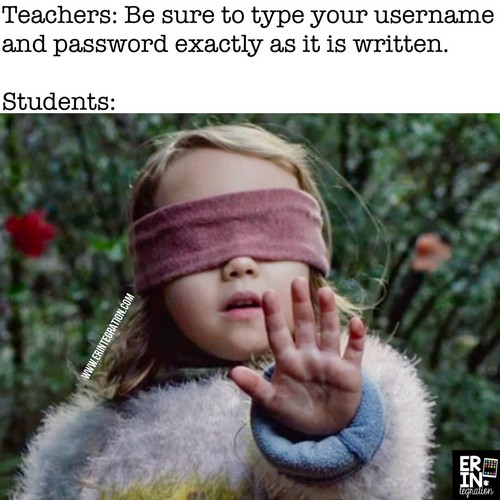
I will leave this meme with you all as I feel it is sometimes a real struggle to use new technology in the classroom and I am sure many of you agree. 

Technology Memes for Teachers - ErintegrationTechnology Memes for Teachers ...


References: 

Coggin, Linda & Buchholz, Beth & Wessel Powell, Christy & Husbye, Nicholas & Wohlwend, Karen. (2014). Expanding Early childhood Literacy Curriculum through Play-Based Film-making and Popular Media. 

Magnifico, A. M., Lammers, J. C., & Fields, D. A. (2018). Affinity spaces, literacies and classrooms: tensions and opportunities. Literacy52(3), 145–152. https://doi-org.sunyempire.idm.oclc.org/10.1111/lit.12133


Wednesday, May 21, 2025

New Media and New Literacies: M2.2 How New Literacies are Relevant to Us

After reading the article from Vanek and the International Literacy Association I had a lot of takeaways. As a first-year teacher in a lower elementary school, it is sometimes hard to decide when to use technology and what to use it for. After these readings, I feel that I had a major takeaway of why we use digital literacy and the importance of it but also that the digital age we are in doesn't need to replace anything just enhance it. 

Throughout the reading in this module, I had some major takeaways. Digital literacy is something I was intrigued by reading in the article by Vanek. Digital literacy is defined as the skills to use technology to find, evaluate, organize, create, and communicate information responsibly. It goes beyond basic computer use to include context-based applications and creative use. This idea goes a lot deeper and encompasses multiple literacies, not a single skill set (Vanek, 2019). I never thought of a lot of skills I use on a day-to-day basis as digital literacy until reading this. "Digital literacy proficiency is needed to fully participate in economic, civic, work, and daily life in the United States" (Vanek, 2019,p. 4). So many skills we all use every day are in fact Digital Literacy. Below I have listed a bunch of skills Vanek explained to be digital literacy.

  • Critical thinking

  • Communication

  • Processing and analyzing information

  • Self-awareness

  • Problem-solving

  • Navigating systems


Information that I use in my work is thinking through how to make technology accessible to my students. In my classroom, we have 10 Chromebooks and 19 students which makes it difficult. A lot of my students have limited access to technology at home. A quote from Vanek that hit home for me was "
 Make use of the devices that learners own so that they can develop comfort using them in new ways. Teachers must attend to issues of Internet access" (Vanek, 2019, 6). It is so important to make it in a way that learners are comfortable with and children are very technologically advanced these days which does help with this. I do find it challenging and am always intrigued to hear about how. others use tech in a lower elementary classroom. 
 
After reading the International Literacy Association article from 2018 I was surprised. As someone who went to school during the digital age but before technology was as advanced as it is now I am always surprised to see the amount of tools that are out there. Learning in a digital age means "classrooms must facilitate authentic learning goals for students; these goals will lead to instructional practices that may find support through digital resources" (International Literacy Association, 2018, P. 2). 

    A paragraph that really resonated with me when sometimes I feel I don't use enough technology in my classroom was, "Powerful literacy instruction should prepare students today

to produce, communicate, interpret, and socialize with peers,

adults, and the broader world they will enter when they graduate-

ate"....." many people today

move fluidly across digital and nondigital resources: texts and

tweets may be used to coordinate plans, whereas face-to-face

meetings can yield multimodal products like Instagram posts

and Facebook messages. Schedules are coordinated digitally,

and groups of employees meet in person to produce digital texts

for presentation to audiences in multiple formats" (International Literacy Association, 2018, P.2). 

As someone who teaches children who are still just learning to read integrating technology is important but so is paper. I find it hard to balance both in the classroom. Many challenges lay within digital literacy, such as, effectively using technology, and balancing new and old literacy styles. 

I look forward to finding more ways to integrate new literacys into my classroom. 

40 Media Literacy Memes ideas | memes, hilarious, media literacy


References: 

International Literacy Association . (2018). LITERACY LEADERSHIP BRIEF Improving Digital Practices for Literacy, Learning, and Justice More Than Just Tools. https://www.literacyworldwide.org/docs/default-source/where-we-stand/ila-improving-digital-practices-literacy-learning-justice.pdf


Vanek, J. (n.d.). Digital Literacy This Brief (M. Fedele-McLeode, C. Moore, & M. Movit, Eds.). https://www.air.org/sites/default/files/TSTMDigitalLiteracyBrief-508.pdf


M2.1 Defining New Literacies and Why They Matter


When thinking of literacy what comes to mind first? To me, my initial thoughts are reading writing speaking. But when you dive deeper literacy is the foundation of everything and that is what the term New Literacy refers to. 

New Literacy Meaning:

Literacy is a term that has evolved throughout time. This new literacy refers to reading, writing, and speaking but also involves using technology and other forms of media. When doing the readings this week a line that resonated with the definition of new literacy was "Literacy practices are no longer restricted to reading and writing printed and written texts in one official and standard form but include multiple modes of representation in diverse cultural contexts and in various languages" (Sang 2017). Literacy has evolved to include more collaboration than individual aspects. I find myself utilizing the new literacy practices all the time in both my professional and personal life. 

In my professional life, I am a first-grade special education teacher. I work in an integrated co-teach model. We rely on technology to support a lot of learning. My students listened to songs about topics, watched educational videos, and played educational games all the time. We recently did a polar animal research unit where students read books, watched videos, and listened to audiobooks to make a topic book and documentary on a specific type of polar animal. Using a multimodal approach and these new literacy practices is what made this accessible to all students. With this transition to new literacy does come challenges but it expands students' knowledge in ways the old literacy concepts hindered. 

In my personal life, I use technology and media to support everything I do. I get recipes for dinner on Pinterest or TikTok. I listen to podcasts. I listen to audiobooks. Everything I do in my free time is a new literacy concept. 

Thing 12: News Literacy | Cool Tools for School

New literacy has evolved our knowledge from just reading and writing to so much more. 

Promoting Equity and Access: 

Confining literacy solely to the ability to read and write print texts in a single dialect, such as academic English, presents significant challenges within educational settings aiming for equity and access.  "If we see literacy as “simply reading and writing”—whether in the sense of

encoding and decoding print, as a tool, a set of skills, or a technology, or as some

kind of psychological methodology—we cannot make sense of our literacy 

experience"( Knobel & Lankshear, 2007). This narrow perspective risks marginalizing students whose primary literacies reside in different languages, dialects, or multimodal forms, effectively creating barriers to learning and participation. More expansive views, embracing "new literacies" like digital fluency, visual literacy, and critical media analysis, can address these issues by validating diverse communication methods, leveraging students' existing strengths, and preparing them to navigate the multifaceted textual landscapes of the contemporary world. In educational spaces, there can be problems that occur when focusing on access to things. I work in a Title 1 school that does not have 1:1 computer ratios. For my classroom of 19 students, there are only 10 computers. This makes it difficult to plan activities that involve new literacy and multimodal approaches. With the shift from old literacy to new literacy things like having enough computers for students is soemthing very difficult to access. 


References: 

Knobel, Michele & Lankshear, Colin. (2007). Sampling "the new" in new literacies. 

Sang, Y. (2017). Expanded Territories of “Literacy”: New Literacies and Multiliteracies. Journal of Education and Practice, 8(8), 16–19. https://files.eric.ed.gov/fulltext/EJ1139059.pdf


Monday, May 12, 2025

New Media and New Literacies Introduction

 Hi everyone! 

My name is Emily Brady. I graduated with my bachelors degree from the College of Saint Rose in may of 2024. I studied childhood and special education while I was there. This year I have been working in a title 1 school in Rensselear County New York. I am currently teaching first grade special education in an inclusion setting. I began pursuing my M.S.ED this past spring semester after taking a few months to get acquainted to the life of being a teacher. 

In my free time I enjoy being outside and exploring. I love playing pickleball, going for walks or hikes, and surrounding myself with fun ways to relax. I have also been recently loving to read as a hobby. 


Learning goals: I am excited for this course as I think there are so many modes of media and enabling in new medias will be enlightening. I love getting to use technology in a way that is useful and helpful both inside and outside of the classroom and I hope to learn about how to implement more media in the classroom. Working with first grade students a lot of technology is inaccessible to them and I really would love more ways to incorporate it. 


50+ Hilarious Meeting Memes for Every ...

M7: Games and Simulations

  https://www.mathplayground.com/ASB_IslandChaseSubtraction.html I chose a math game that we use very often at my school. This website has g...